
Replacing the rope on your cat’s scratching post can extend its life and keep your cat engaged. Choosing the right rope material is important for durability, safety, and your cat’s enjoyment. Below, we compare several popular rope options, highlighting their feel, everyday use, and what to consider for your next DIY cat furniture project.

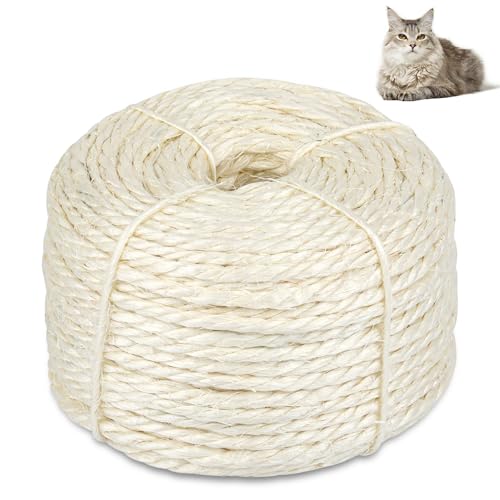

Top 5 Rope For Cat Scratching Posts
We researched and compared the top products in the Rope For Cat Scratching Posts category to provide you with these recommendations.1. Pelzin Natural Sisal Rope, 1/4 Inch x 50 Feet
This rope is crafted from natural sisal, offering a coarse, fibrous texture that most cats find irresistible for scratching. Its sturdy feel makes it practical for wrapping around posts, trees, or other cat furniture, and it holds up well to daily use. The rope is untreated and biodegradable, making it a straightforward option for eco-conscious pet owners seeking a classic scratching surface.
What We Like:
- Coarse texture attracts cats
- Made from natural, untreated fibers
- Suited for DIY repairs and projects
- Biodegradable and eco-friendly
- Holds up to frequent scratching
What Could Be Improved:
- May shed fibers during installation
- Slight odor when new
2. Opvixi 164 Feet Sisal Rope, 1/6 Inch
This sisal rope features a slightly rough feel, ideal for encouraging healthy scratching habits. Its thinner diameter makes it flexible for wrapping around posts of various sizes, and the generous length is useful for larger projects or multiple repairs. The natural material is sturdy, though it may have a mild scent initially.
What We Like:
- Long roll covers multiple posts
- Rough texture supports claw health
- Flexible for wrapping tight corners
- Versatile for DIY and furniture projects
What Could Be Improved:
- Initial odor may require airing out
- Gloves recommended during handling
3. Radix Rope Natural Jute Twine, 8mm x 50ft
This thick jute rope has a softer touch compared to sisal, while still providing enough resistance for scratching. Its heavy-duty build is practical for posts that see a lot of use or for larger cat trees. The natural jute fibers are pet-safe and offer a rustic appearance for creative DIY projects.
What We Like:
- Thick and durable construction
- Softer than typical sisal
- Fray-resistant finish
- Pet-safe natural fibers
- Suitable for indoor and outdoor use
What Could Be Improved:
- May be too thick for small posts
- Less abrasive than sisal
4. PerkHomy 5mm Jute Rope, 105 Feet

This rope is made from pure jute, offering a soft, natural texture that’s easy on both hands and paws. It’s practical for wrapping cat scratchers or adding a decorative touch to pet furniture. The rope is eco-friendly and suited for a variety of household and craft uses beyond cat posts.
What We Like:
- Gentle feel for cats
- Biodegradable and eco-friendly
- Versatile for crafts and repairs
- Ample length for most projects
What Could Be Improved:
- Not as rough as sisal for heavy scratchers
- Can develop fuzz with heavy use
5. Juomid Cat Sisal Rope, 164 Feet, 4mm

This sisal rope offers a traditional, rough texture that cats naturally enjoy for scratching. Its moderate thickness makes it suitable for wrapping posts, furniture legs, or creating new scratching areas. The rope is untreated and may have a mild scent at first, but it’s favored for its durability and scratch appeal.
What We Like:
- Textured surface attracts cats
- Good length for multiple uses
- No chemical treatments
- Multipurpose for DIY projects
What Could Be Improved:
- Slightly rougher than jute
- May have a temporary odor
How to Choose Rope for Cat Scratching Posts
Material Type: Sisal vs. Jute
- Sisal is rougher and more abrasive
- Jute is softer and less scratchy
- Both are natural and biodegradable
- Cats often prefer sisal for scratching satisfaction
- Jute may suit cats with sensitive paws
Sisal rope provides a classic scratch surface, while jute offers a gentler feel. Consider your cat’s preferences and scratching habits when choosing between the two.
Rope Thickness and Length
- Thicker ropes last longer but may not fit small posts
- Thinner ropes wrap easily around tight corners
- Longer rolls are better for large posts or multiple repairs
- Measure your post’s circumference and height before buying
Selecting the right thickness ensures a snug fit and durability. Calculate how much rope you need to avoid running short during a project.
Installation and Handling
- Some ropes shed fibers during wrapping
- Gloves can protect hands from rough textures
- Untreated ropes may have a natural odor
- Allow rope to air out if scent is strong
Proper installation helps the rope last longer and keeps the post looking tidy. Handling precautions can make the process smoother and more comfortable.
Cat Preferences and Use Cases
- Rough textures encourage healthy scratching
- Softer ropes may reduce wear on claws
- Some cats are drawn to certain materials
- Rope can be used on posts, furniture legs, or DIY toys
Observe your cat’s scratching style to match the rope type. Experimenting with placement can help redirect scratching to appropriate surfaces.
FAQ For Rope For Cat Scratching Posts
1. What is the best rope material for cat scratching posts?
2. How do I determine how much rope I need to rewrap a scratching post?
3. Is natural rope safe for cats?
4. How do I install new rope on a cat scratching post?
5. Can I use rope to protect furniture from cat scratching?

Peter Armani
Related Posts
- Best 5 Fish To Have As Pets You Can Buy
- Top 5 Dog Fencing Options: Expert Buying Guide
- Top 0 Anti-wrinkle Creams For Black Skin: Best Picks
- Top 5 Small Dogs For Protection
- Top 5 Dog Melatonin Supplements: Expert Buying Guide
- 5 Best Custom Dog Pillows: Buyer’s Guide
- Top 5 Dog Mom Gifts
- 5 Best Hot Dog Roller Machines: Buyer’s Guide
- Best 5 Presents For Dog Walkers You Can Buy
- 5 Best Kayaks For Dogs: Buyer’s Guide
- 5 Best Non Plastic Laundry Baskets: Buyer’s Guide
- Top 5 Dog For Rv: Expert Buying Guide
- Top 5 Mid-sized Dog Breeds: Expert Buying Guide
- 5 Best Dog Cones After Surgery
- 5 Best Aviary Birds
- Top 5 For Cat Allergies
- Top 5 Supplements To Calm Aggressive Dogs
- Top 5 Jack Russell Harnesses: Best Picks
- Top 5 Products For Dog Allergies: Best Picks
- 5 Best Free Dog Tv Channels: Buyer’s Guide