
Unwanted cat behavior can be a challenge, whether it’s scratching furniture indoors or digging in your garden outside. Cat repellents come in several forms, including sprays, granules, and scented balls, each designed to help set boundaries without harm. Choosing the right option depends on your specific needs, the area you want to protect, and your preference for natural or synthetic ingredients. This guide compares a variety of cat repellents to help you find a practical solution for your home and outdoor spaces.


Top 5 Cat Repellents
We researched and compared the top products in the Cat Repellents category to provide you with these recommendations.1. Natural Peppermint Oil Cat Deterrent Balls
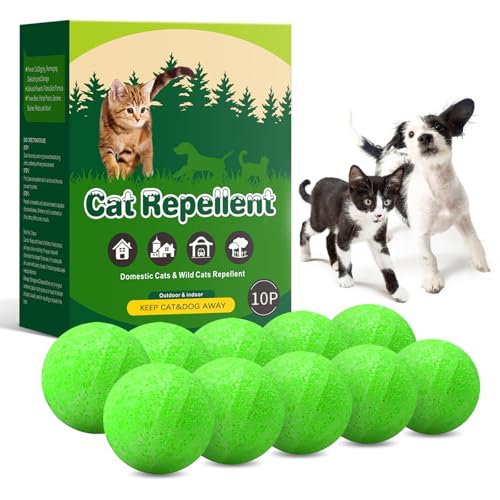
These deterrent balls have a soft, lightweight feel and are infused with natural oils like peppermint, camphor, and lemongrass. They’re typically hung or placed in mesh bags around gardens, porches, or indoor areas to discourage cats from lingering or marking. The formula is designed for low-maintenance use and is suitable for households seeking a gentle, plant-based approach.
What We Like:
- Uses natural essential oils
- Can be hung or placed discreetly
- Suitable for both indoor and outdoor use
- Scent lasts through various weather conditions
- Includes mesh bags for easy placement
What Could Be Improved:
- Scent may fade in high-traffic areas
- Initial setup may require patience for best results
2. Natural Formula Cat Deterrent Spray
This spray features a light, citrus scent and is easy to apply to surfaces like furniture, carpets, or outdoor plants. It’s commonly used to help prevent scratching, marking, or chewing, relying on natural extracts to set gentle boundaries. The formula is safe for use around most household areas and doesn’t leave stains.
What We Like:
- Made with botanical ingredients
- No residue or staining
- Works on indoor and outdoor surfaces
- Helps reinforce positive habits with consistent use
- Simple spray application
What Could Be Improved:
- May require frequent reapplication
- Some cats may need extended training for effectiveness
3. Granular Cat Repellent for Gardens
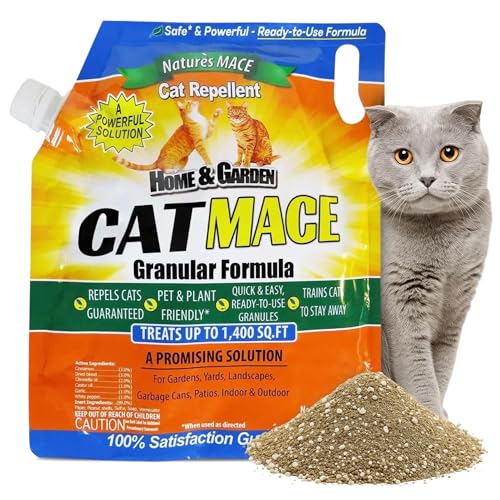
This granular repellent has a rough, sand-like texture that's easy to spread by hand or scoop. It's typically used in gardens and flowerbeds to create a scent barrier, helping train cats to avoid certain areas. Made with plant-based ingredients, it's a practical choice for those needing coverage in larger spaces.
What We Like:
- Plant-based ingredients
- Safe for use around children and pets
- Suitable for large coverage areas
- Weather-resistant for all-season use
- Helps train cats to avoid treated zones
What Could Be Improved:
- Requires regular reapplication
- Scent may be noticeable to some people
- Not an instant solution
4. Dual Scent Cat Deterrent Spray
This spray features a light, botanical scent that feels fresh on both indoor and outdoor surfaces. It's commonly used to deter scratching, marking, and chewing on furniture or garden areas. The formula uses a combination of scent and taste cues to provide gentle, consistent feedback for training routines.
What We Like:
- Combines scent and taste deterrents
- Suitable for indoor and outdoor use
- Crafted with pet-safe essential oils
- Helps reinforce household boundaries
- Versatile for various problem behaviors
What Could Be Improved:
- May require daily application for best results
- Some cats may ignore the taste cue
5. Long-Lasting Peppermint Cat Deterrent Balls

These deterrent balls are soft and lightweight, infused with natural peppermint oil for a gentle but noticeable scent. They come with mesh bags for easy hanging or placement in garden beds or indoor spaces. Designed for low-maintenance use, they provide a non-intrusive way to discourage cats from entering specific areas.
What We Like:
- Made with natural essential oils
- Suitable for indoor and outdoor use
- Each ball covers a generous area
- Simple to hang or place
- Long-lasting scent
What Could Be Improved:
- Scent fades over time
- May need more frequent replacement in high-traffic areas
How to Choose Cat Repellents
- Consider indoor vs. outdoor use
- Decide on spray, granule, or scent ball format
- Check for natural vs. synthetic ingredients
- Think about area size and placement
- Evaluate ease of application and maintenance
Cat repellents come in various forms, each suited for different scenarios. Sprays are best for targeted spots like furniture, while granules and scent balls work well for larger or outdoor areas.
Application Method
- Sprays: Good for furniture, carpets, and small areas
- Granules: Best for gardens, flowerbeds, and lawns
- Scented balls: Flexible for both indoor and outdoor use
- Mesh bags or direct placement options
Choose a method that matches your problem area. Sprays offer precision, while granules and balls cover broader zones.
Ingredients and Safety
- Look for plant-based or essential oil formulas
- Avoid harsh chemicals in homes with children or pets
- Some scents (like citrus or peppermint) are more effective for cats
- Check if the product is safe for use around edible plants
Natural ingredients are preferred for households with pets or kids. Always review the label for specific safety notes.
Longevity and Maintenance
- Some repellents require daily or weekly reapplication
- Weather can affect outdoor formulas
- Scented balls may last longer but eventually fade
- Granules may need to be reapplied after rain
Think about how much effort you want to invest in upkeep. Longer-lasting options are lower maintenance but may cost more over time.
Coverage Area
- Sprays are ideal for small, defined spaces
- Granules and balls suit larger gardens or multiple entry points
- Consider the number of problem spots
- Some products include multiple units or bags for wider coverage
Assess the size of the area you need to protect. Multiple units or larger containers may be more cost-effective for big spaces.
Training and Effectiveness
- Repellents work best when combined with cleaning and training
- Remove old markings or scents before applying
- Consistent use is key for lasting results
- Some cats may be more persistent than others
No repellent is instant—patience and routine are important. Reinforce boundaries with positive training for best outcomes.
FAQ For Cat Repellents
1. What types of cat repellents are available?
2. Are natural cat repellents safe for pets and children?
3. How often do I need to reapply cat repellents?
4. Can cat repellents be used on edible plants?
5. Will cat repellents work immediately?

Peter Armani
Related Posts
- Top 5 Dog Halters: Expert Buying Guide
- Top 5 Small Dog Harnesses: Expert Buying Guide
- 5 Best Large Dog Harnesses
- Top 5 Slip Leads: Expert Buying Guide
- Top 5 Vermont Hikes
- 5 Best Dog Shoes For Small Dogs: Buyer’s Guide
- Top 5 Dog Dad Ever Shirt
- Best 5 Products For Dog Breath You Can Buy
- Top 5 Large Dog Life Jackets
- Top 5 Dog Dremels: Best Picks
- Best 5 Dog Potty Grass Options You Can Buy
- Top 5 Dog Portrait Artists: Expert Buying Guide
- 5 Best Cat Litter Bins
- Top 5 Moisturizers For Dry Dog Paws
- Top 5 Dog Blowers For Shedding: Expert Buying Guide
- 5 Best Dog Diapers For Poop
- 5 Best Dog Trainers In My Area: Buyer’s Guide
- Top 5 Anti-pull Dog Harnesses: Best Picks
- 5 Best Lights For Walking At Night
- 5 Best Cord Protector For Pets: Buyer’s Guide