
Unwanted cat behavior, such as digging in gardens or marking indoors, can be a challenge for many households. Cat deterrents offer a range of solutions designed to discourage cats from entering certain areas or engaging in destructive habits. Whether you’re looking for a humane way to protect your plants, furniture, or outdoor spaces, understanding the different types of deterrents can help you choose the most practical option for your needs.


Top 5 Cat Deterrents
We researched and compared the top products in the Cat Deterrents category to provide you with these recommendations.1. Petfolio 12 Pack Scat Mat for Cats
These lightweight plastic mats have flexible spikes that create an uncomfortable surface for cats, discouraging them from walking or lounging in protected areas. They're easy to cut or connect, letting you customize coverage around your car, driveway, or garden. The mats are portable and can be repositioned as needed for different problem spots.
What We Like:
- Covers large areas with multiple mats
- Customizable fit for tricky spaces
- No tools needed for setup
- Works indoors and outdoors
- Humane deterrent without harm
What Could Be Improved:
- Spikes may flatten over time
- May not stop determined cats
2. Aocoray 8 Pack Cat Deterrent Scat Mat
This set of clear PVC mats uses small spikes to gently discourage cats and other animals from entering protected areas. The mats have a firm, sturdy feel and can be linked together or trimmed to fit different spaces. Suitable for both indoor and outdoor use, they blend in with surroundings and are easy to reposition as needed.
What We Like:
- Thicker, more durable PVC material
- Clear color is less noticeable
- Can be used for pets and wildlife
- Flexible placement options
- Simple maintenance and cleaning
What Could Be Improved:
- Some cats may adapt over time
- May require frequent repositioning
3. Nature's MACE Granular Cat Repellent for Gardens
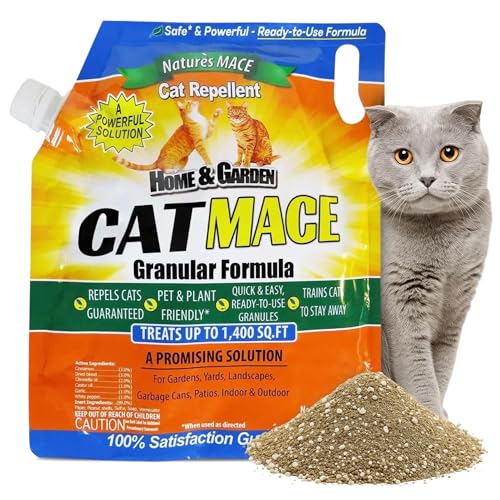
This granular repellent has a gritty, sand-like texture that’s easy to sprinkle in gardens, driveways, or around patios. It’s made from plant-based ingredients and is intended to create a scent barrier that helps discourage cats from entering treated spaces. The formula is weather-resistant, making it suitable for use throughout different seasons.
What We Like:
- Made from plant-based ingredients
- Safe for use around pets and kids
- Covers large outdoor areas
- Stays effective in various weather
- Supports long-term behavior change
What Could Be Improved:
- Needs regular reapplication
- Scent may be noticeable to some
- Not an immediate solution
4. Nature's Miracle Advanced Platinum No More Spraying
This spray is designed for use on surfaces where cats tend to spray or mark repeatedly. The formula has a distinct scent that is noticeable to cats but subtle for most people, making it practical for everyday indoor use. It can be applied to furniture, walls, or any area you want to keep off-limits, and is suitable for households seeking a gentle behavioral training aid.
What We Like:
- Helps deter repetitive spraying
- Can be used on multiple surfaces
- Scented with essential oils
- Safe for pets and home when used as directed
- Easy to apply as needed
What Could Be Improved:
- May require frequent reapplication
- Scent may not appeal to all owners
5. Long-Lasting Peppermint Cat Deterrent Balls

These deterrent balls are soft and lightweight, infused with natural peppermint oil for a gentle but noticeable scent. They come with mesh bags for easy hanging or placement in garden beds or indoor spaces. Designed for low-maintenance use, they provide a non-intrusive way to discourage cats from entering specific areas.
What We Like:
- Made with natural essential oils
- Suitable for indoor and outdoor use
- Each ball covers a generous area
- Simple to hang or place
- Long-lasting scent
What Could Be Improved:
- Scent fades over time
- May need more frequent replacement in high-traffic areas
How to Choose Cat Deterrents
- Consider indoor vs. outdoor use
- Decide between physical barriers, sprays, or scent-based options
- Think about coverage area and flexibility
- Evaluate safety for pets, children, and plants
- Assess ease of setup and maintenance
Different deterrents work best in specific scenarios. Physical mats are practical for surfaces like counters or gardens, while sprays and scent-based products can target marking or entry points.
Physical Barriers (Scat Mats)
- Effective for protecting surfaces and specific zones
- Reusable and easy to reposition
- Humane, non-toxic approach
- Some require cutting or linking for larger areas
Physical mats are well-suited for keeping cats off furniture, garden beds, or holiday decorations. Choose a design that fits your space and consider how visible you want the deterrent to be.
Scent-Based Repellents
- Use natural or synthetic scents cats dislike
- Available in granules, sprays, or balls
- Can offer wide coverage outdoors
- May need regular reapplication
These are ideal for gardens, flowerbeds, or entryways where physical barriers aren’t practical. Always check the ingredients for safety around children and pets.
Sprays for Marking and Behavior
- Targeted for indoor use on furniture or walls
- Often use essential oils or plant extracts
- Can help break marking habits
- Require consistent use for best results
Sprays are useful when dealing with repetitive marking or scratching. Apply to cleaned areas and monitor for any changes in behavior.
Coverage Area and Placement
- Larger packs or containers cover more ground
- Flexible designs allow custom fit
- Consider the frequency of cat visits
For outdoor spaces or large gardens, granular or multi-pack deterrents are often more efficient. For small indoor areas, sprays or a few mats may suffice.
Safety and Maintenance
- Look for non-toxic, pet-safe materials
- Check for weather resistance if used outdoors
- Understand reapplication needs
Choose products that align with your household’s safety needs and be prepared to adjust placement or reapply as needed for ongoing effectiveness.
FAQ For Cat Deterrents
1. What types of cat deterrents are most effective for gardens?
2. Are cat deterrents safe to use around children and other pets?
3. How often should I reapply sprays or scent-based repellents?
4. Can I use multiple types of deterrents together?
5. Will these deterrents work for all cats?

Peter Armani
Related Posts
- Best 5 Cat Heating Pads You Can Buy
- Top 5 Dog Harnesses For Puppies: Best Picks
- 5 Best Comfort Dogs: Buyer’s Guide
- Top 5 Dog Jackets With Built-in Harnesses: Expert Buying Guide
- 5 Best Dog Paw Trimmers
- 5 Best Supplements For Dog Bad Breath: Buyer’s Guide
- Top 5 Dog Litter Box: Best Picks
- 5 Best Waterproof Dog Blankets: Buyer’s Guide
- 5 Best Names For A Grey Cat
- 5 Best Horse Trimmers: Buyer’s Guide
- Top 5 Dog Dishes
- Top 5 Cat Cages: Expert Buying Guide
- Top 5 Dog Urine Grass Savers: Best Picks
- Top 5 Medium-sized Dog Breeds: Best Picks
- 5 Best Dog Whistle Apps
- Best 5 Cat Names You Can Buy
- Top 5 Boxer Harnesses
- Top 5 Dog Stockings: Best Picks
- Best 5 Cat Repellants You Can Buy
- Top 5 Dog Stake Tie Outs